
[ad_1]

Thanks to the achievement of an first protection demo for an implantable gadget that can translate the brain’s electrical impulses into readable alerts, we’re a move closer to currently being in a position to text—or normally interface with our devices—using just our ideas.
Most effective of all, this new mind-computer interface (BCI)—“brain modem,” if you will—doesn’t need a gap in your head. It does, on the other hand, involve a gap in your chest. And which is just 1 factor that could slow progress of the tech, to say practically nothing of complicating any potential public rollout.
Brain modems are coming, irrespective of whether they’ll be delivered by Elon Musk’s Neuralink business, or some other team . But how quickly they’ll be all set, how very well they’ll perform, and how a lot of people today will want them are all huge open concerns.
Late previous thirty day period, New York-based biotech organization Synchron declared the effects of a trial of its two-piece mind modem in four persons with amyotrophic lateral sclerosis, or ALS—a progressive neurodegenerative illness that has an effect on the brain and spinal wire and can direct to paralysis. It was the very first time the U.S. Meals and Drug Administration had accepted a BCI for medical trials.
“It’s likely to offer the probable for thousands and thousands of individuals to have enhanced abilities to interact with their atmosphere and for that reason have a greater quality of everyday living,” J Mocco, a neurosurgeon and Synchron guide, explained to The Every day Beast.

Testers monitored the 4 volunteers for a 12 months, on the lookout for any damaging outcomes from the implants. There ended up “no severe adverse functions that led to incapacity or dying,” the company introduced. Synchron’s group released their effects in the Journal of NeuroInterventional Surgical procedures.
The implants weren’t just secure, according to Synchron. They worked too—at minimum on a rudimentary level. The equipment “allowed individuals to use a laptop to communicate by textual content and carry out every day responsibilities this sort of as online browsing and banking.”
That may possibly seem like science fiction, but the thought is pretty uncomplicated. Our brains transfer around information by way of subtle electrical impulses. Our views, in other words and phrases, are electrical power. And they flash in recognizable designs. Set a sensor in the mind, and it can examine the styles. Connect that sensor to a radio transmitter, and you can practically beam your feelings to a appropriate product the exact way phones join to telephones or your computer system connects to WiFi.
The purposes are noticeable, primarily for paralyzed persons. With a safe and sound, helpful mind modem, you wouldn’t require to go or even talk in purchase to ship a text, search the web or interact with any variety of electronic gadgets.
All you’d have to do is feel—and permit the modem do the operate.

There are troubles, of system. For starters, the earliest brain modems were being blend sensors and transmitters that scientists implanted directly into people’s skulls. Anytime you are drilling into someone’s skull, the possibility of an infection, swelling, and brain problems are sizeable. “Intracranial medical procedures will normally be a risky portion of invasive BCI techniques,” Chris Crawford, head of the Human-Know-how Interaction Lab at the University of Alabama, instructed The Day-to-day Beast.
Not to mention, it is terrifying. If the objective is to initial aid thousands and thousands of folks who go through some degree of paralysis, and then finally give brain modems to the common public, drilling holes in heads is an evident non-starter. Crawford cited “public notion of BCI” as “the future obstacle.”
The remedy to the gap-in-the-head challenge came by way of cardiac medicine. It’s getting to be more prevalent for heart surgeons to handle blockages without running anywhere in close proximity to the heart or making any massive incisions at all. As an alternative, they make a small slash in the groin or wrist and insert a collapsed mesh tube, likely just a number of centimeters in duration, into an artery. This “stent” acts like scaffolding. Expanded electrically, a stent lodges in a blood vessel around the coronary heart, in which it keeps blood flowing past a blockage.
Neurosurgeons have started adapting stent tech for their most recent brain-modem types. As the to start with company to get the Food and drug administration nod for a scientific demo, Synchron is arguably the chief in this industry.
Start off with a stent. Incorporate a layer of electrical sensors to the mesh, manufacturing a mix electrode and stent that builders connect with a “stentrode.” Inject it into an artery in the neck and lodge it in a person of the blood vessels inside your skull. From there, it senses the impulses in your brain—without ever touching it. “It does not instantly violate the brain,” Mocco stressed.

Now here’s the challenging aspect. The stentrode requires some way to get a sign out of the entire body. Bone, in particular thick bone like the skull, tends to block radio signals—hence the hole-in-the-head approach that was typical with the initially technology of experimental BCIs.
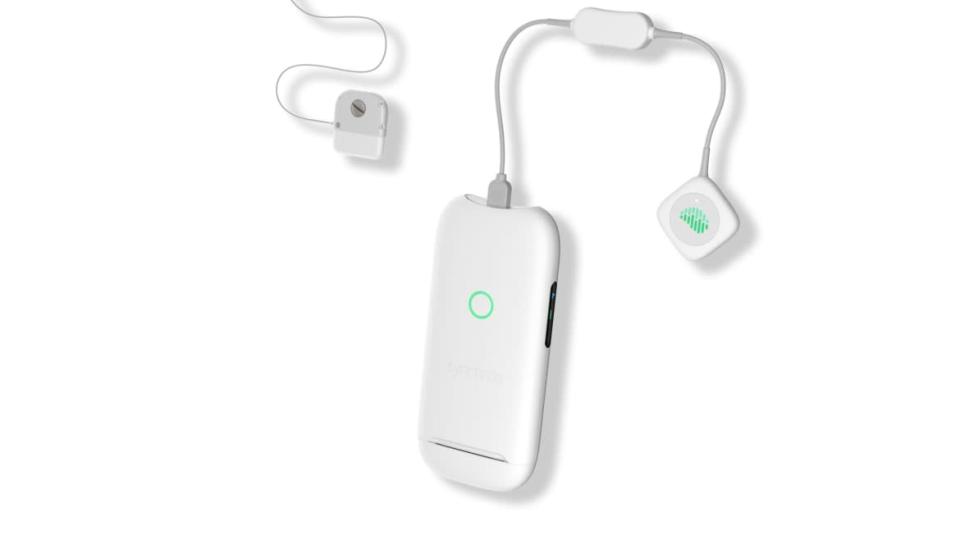
But there are areas of the system with no bones. The upper body concerning your ribs, for instance. Synchron acquired about the skull problem by implanting its transmitter in the upper body and connecting it, via a fine wire under the skin, to the stentrode in the brain.
That combo—a sensor in the brain and a coin-sizing transmitter in the chest—is Synchon’s distinctive sauce. It is most likely non-invasive enough that a whole lot of persons would be inclined to get it implanted. “This has likely to be an out-individual process,” Mocco claimed.
And even if people nonetheless balk at a chest implant, at least they will not balk as hard as they would when staring down a bone-drill aiming at their cranium. Synchron’s stentrode-and-upper body-transmitter combo “may be a good compromise,” Marvin Andujar, the lab director at the College of South Florida’s Neuro-Machine Conversation Lab, advised The Daily Beast.
Synchron’s tech is winning more than some gurus in the field, even ones who are skeptical of implanted devices. Crawford thinks attitudes will alter as stentrodes substitute riskier cranium-transmitters. “As very long as protection is being considered initial, marketability, and success will ultimately boost more than time,” he claimed.
No a single is pretending there’s not a large amount of function still left to do. The Synchon product may be safe and sound, if a yearlong trial with just 4 folks is any indication. But secure isn’t the identical as beneficial.
This initially stentrode from Synchron enables for only very limited interaction with units. A BCI implanted in the cranium can correctly transmit just 90 textual content figures for every moment. The equal of typing a solitary sentence in 60 seconds. That’s not rapid. The Synchron device with its chest transmitter is even slower. The finest final result from the new trials was 20 people for every moment. A sentence each individual 4 minutes or so.
BCIs need to get faster and significantly less invasive. Finally, a brain modem must be “fashionable, not weird-looking” and also “robust and secure at the very same time,” Andujar claimed. The fantastic edition is thoroughly non-invasive—a cap you don on your head. Sensors in the lining study your ideas. Transmitters on the very same cap connection with your units. Your ideas spill onto your screens at the level you assume them.
But that suitable brain modem is just a aspiration for now. Today’s tech nonetheless requires some way of having minimal spurts of facts by way of, or around, our bones. Synchron is the chief in stentrode mind modems and it is only just begun screening its machine. “Additional trails about more time time periods will be required to continue progress,” Crawford reported.
Even now, even a modest-scale safety trial of a compromise unit with middling performance effects is a massive action for a tech that could, with time and refinement, make so quite a few life so much better.
Up coming up for Synchron: a bigger trial—one that Mocco mentioned will emphasis on “maximizing efficacy.” That is, earning additional gadgets work far better when all the user can do is think at them. For starters, they need to have to be able to output far more than a few phrases for each minute. Just after all, our ideas go a large amount quicker than that.
Go through much more at The Daily Beast.
Bought a tip? Send out it to The Day by day Beast here
Get the Each day Beast’s largest scoops and scandals sent ideal to your inbox. Indication up now.
[ad_2]
Resource url
About the Author


